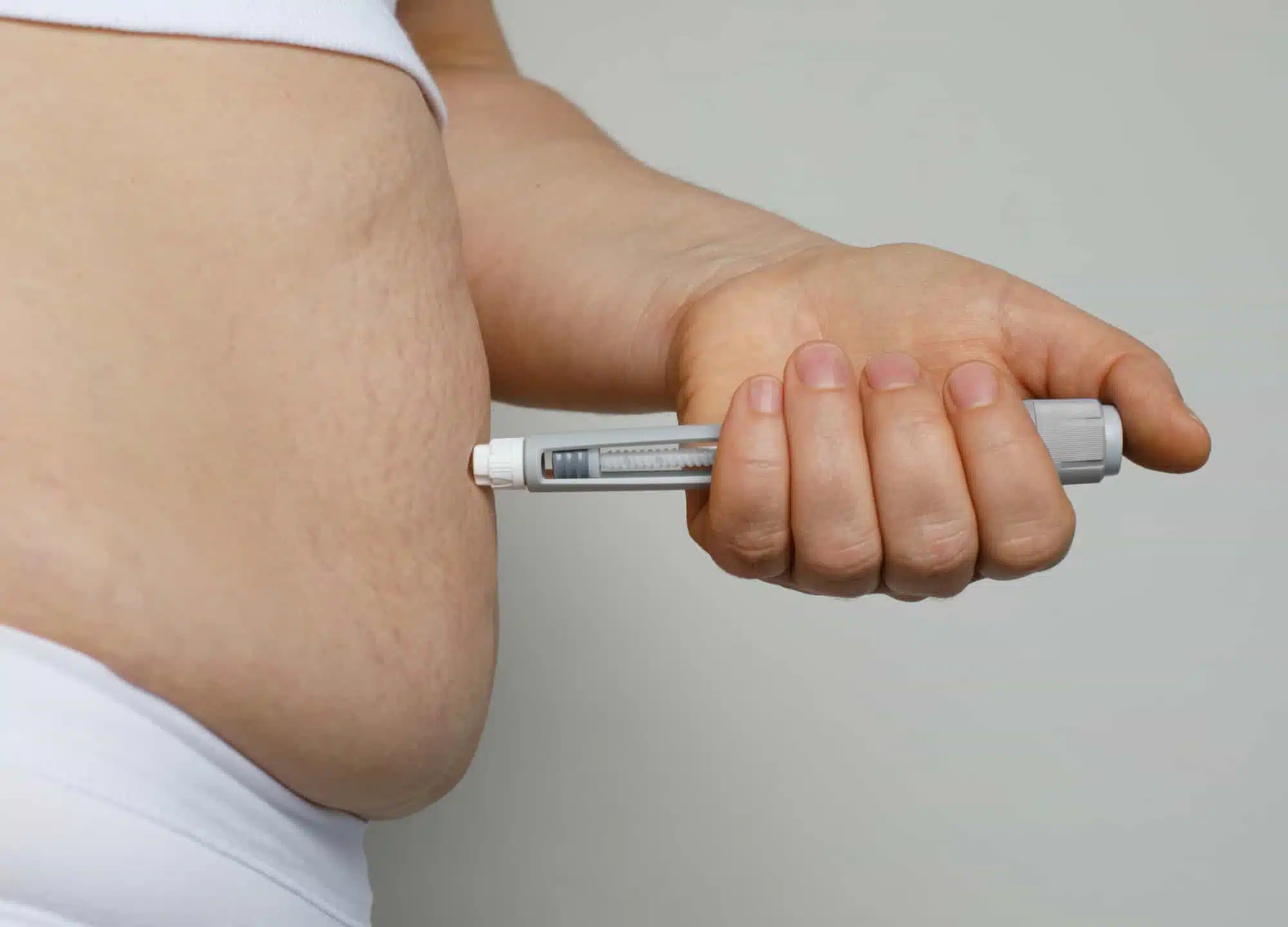
What Are GLP-1 Medications?
- Used for weight loss, diabetes, and metabolic optimization
- Work by reducing appetite and improving insulin sensitivity
- Examples include Ozempic®, Wegovy®, Mounjaro®, and Zepbound®
How GLP-1s Work
- Mimic natural hormones produced by your gut
- Slow stomach emptying and help regulate blood sugar
- Act on the brain to reduce cravings and overeating
Benefits of GLP-1 Medications
- Clinically proven and sustained weight loss
- Lower A1C, inflammation, blood pressure, and triglycerides
- Support liver health, improve insulin resistance, and reduce cardiovascular risk
GLP-1 vs. GLP-1/GIP Dual Agonists
- GLP-1 medications (e.g., semaglutide) average ~15% weight loss
- Dual agonists (e.g., tirzepatide) average 16–22.5% weight loss
- Dual agonists offer stronger appetite regulation and metabolic benefits
Myth-Busting: Safety & Side Effects
- Myth: GLP-1s cause blindness — Fact: Risk only appears in advanced diabetic eye disease with rapid A1C drops
- Myth: GLP-1s cause gastroparesis — Fact: True gastroparesis is rare; digestion slowing is expected
- Myth: They cause major muscle loss — Fact: Most loss is fat; strength training + protein protect muscle
Micro-Dosing Explained
- True micro-dosing = slow titration with clinical oversight
- Does NOT mean staying at a tiny dose forever
- Does NOT mean injecting once every 2–3 weeks
- Used for GI-sensitive patients, IBS/SIBO, anxiety around dosing
GLP-1s in Autoimmune & Inflammatory Conditions
- GLP-1s can reduce inflammatory markers such as CRP and IL-6
- Early research shows signals in RA, psoriatic arthritis, osteoarthritis, and NAFLD
- Exciting but still experimental; not yet a proven autoimmune therapy
GLP-1s & Addictive Behaviors
- GLP-1s & Addictive Behaviors
- Low-dose semaglutide has reduced alcohol cravings in early trials
- Signals for reduced cocaine seeking, opioid reinforcement, and nicotine cravings
- Promising research, but not yet standard treatment
Side Effects & How to Manage Them
- Common: nausea, fullness, constipation, diarrhea, fatigue
- Less common: reflux, decreased appetite to extremes
- Rare: gallbladder issues, pancreatitis, bowel obstruction
- Slow dose titration prevents most issues, ensuring adequate fluid intake, increasing fiber and emphasizing daily activity/exercise all help to reduce constipation.
The Future of GLP-1 Medications
- Triple agonists (e.g., retatrutide) show 23–24% weight loss
- Still in Phase 3 — NOT FDA approved
- Avoid non-FDA-approved ‘research chemicals’ or grey-market versions
Pricing Changes & the Compounding Landscape
- Government negotiations are lowering list prices for GLP-1 medications
- Medicaid and Medicare expansion are reshaping insurance coverage
- Compounding is facing stricter oversight and reduced demand
- FDA-approved meds will become more accessible and affordable
Lifestyle Still Matters
- Protein intake supports muscle retention
- Strength training maximizes fat loss and improves metabolism
- Sleep, stress management, hydration, and mindset remain essential
Want expert guidance as you add GLP-1 meds to your arsenal? Set your initial consultation today!